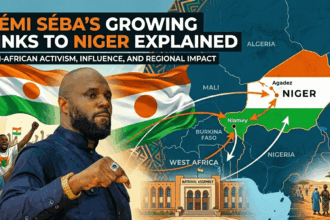

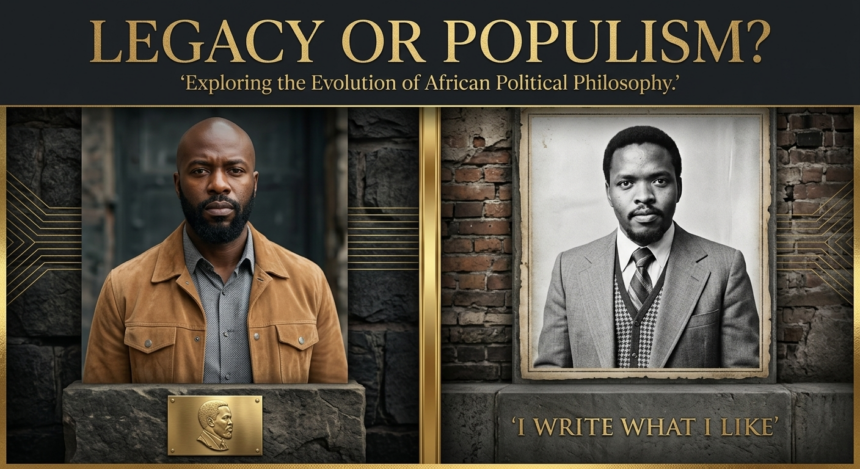
Kémi Séba Wants The Aura of Steve Biko – But The Comparison Does Not Hold
In moments of political controversy, there is often a temptation to cloak modern agitators in the moral authority of genuine liberation icons. It is a shortcut to legitimacy: invoke the language of resistance, frame yourself as persecuted by the system, and present every criticism as proof that you are “dangerous to power”.
That appears to be the strategy increasingly employed by Kémi Séba.
During his affidavit read into the record at the Pretoria Magistrates Court this week, Séba attempted exactly this kind of historical positioning. In defending himself against charges linked to alleged contraventions of South Africa’s Immigration Act, he cast his legal troubles not as an immigration matter, but as part of a wider political campaign against anti-imperialist voices. In doing so, he invoked Steve Biko directly – presenting himself as part of the same lineage of African resistance figures targeted by powerful interests because of their political beliefs.
It was a striking comparison. But it is one that collapses under scrutiny.
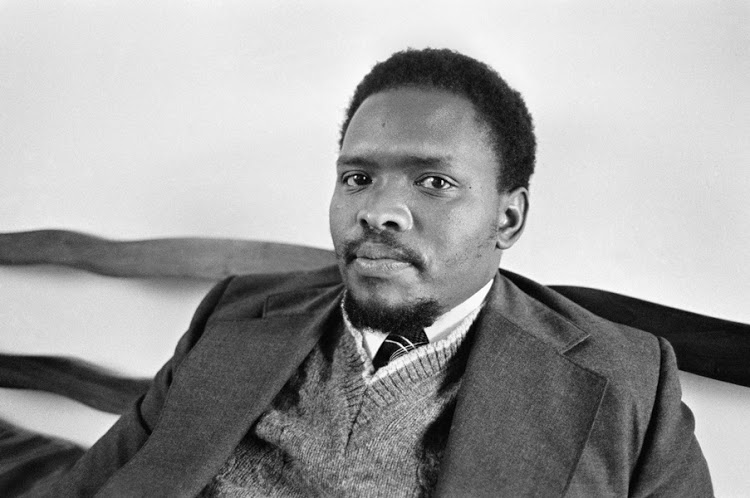
Sack# 28802
Date: 9/03/1976
Since his arrest in South Africa in April 2026, Séba and his supporters have increasingly sought to position him not merely as a political activist, but as a victim of neo-colonial suppression. The imagery is deliberate. The rhetoric is familiar. The appeal is emotional. But placing Kémi Séba alongside the legacy of Steve Biko is not only historically inaccurate – it fundamentally misunderstands what Biko represented.
Steve Biko’s politics were rooted in intellectual liberation, ethical leadership and human dignity. His Black Consciousness philosophy was not built on spectacle or conspiracy; it was built on the disciplined reconstruction of self-worth among oppressed people. Biko challenged apartheid not through chaos or personal mythology, but through moral clarity.
He believed Black people had to reject psychological subjugation before political liberation could be meaningful. His work centred education, organisation, community empowerment and strategic resistance. He did not ask to be worshipped. He asked people to think.
That distinction matters.
Kémi Séba, by contrast, operates in a political ecosystem increasingly shaped by outrage economics, digital disinformation and anti-institutional populism. He presents himself as a revolutionary voice against Western imperialism, particularly French influence in Africa, and there are legitimate debates to be had about neo-colonial economic structures, currency dependence, and foreign influence on the continent. But criticism of Western power alone does not make someone the heir to Biko’s legacy.
The deeper question is: what kind of politics follows the criticism?
Biko’s politics sought to build democratic consciousness. Séba’s style of activism often thrives on antagonism, polarisation and distrust. Where Biko encouraged disciplined political thought, Séba frequently leans into inflammatory rhetoric, simplified geopolitical narratives and conspiratorial framing. His messaging often divides the world into corrupt elites and righteous revolutionaries, leaving little room for complexity, accountability or institutional legitimacy.
That is not Black Consciousness. It is performance populism.
Biko understood that liberation movements lose their ethical centre when they become driven by personality cults. Séba’s political identity, however, is heavily personalised. His public persona is the message. Every arrest becomes evidence of martyrdom. Every legal process becomes proof of persecution. Every criticism is reframed as an attack by hidden forces.
Séba affidavit itself reflected this pattern. Rather than narrowly addressing the legal merits of the immigration case before the court, he framed himself as a geopolitical target – man allegedly pursued because he speaks uncomfortable truths about Western power in Africa. By invoking Biko in that context, he was not merely referencing history; he was attempting to inherit moral legitimacy from one of South Africa’s most revered liberation figures.
That approach may be effective in the social media age, but it is fundamentally different from the intellectual seriousness that defined Biko’s movement.
There is also an important difference in how both men related to truth and responsibility.
Biko confronted power structures openly and coherently. He articulated his arguments rigorously, even when facing immense state repression. He was willing to engage with difficult realities without collapsing into simplistic binaries. Séba’s politics, on the other hand, often mirror the broader global trend in which anti-establishment figures weaponise mistrust itself. Institutions are portrayed as inherently illegitimate. Journalists become enemies. Courts become political tools. Critics become agents of foreign interests.
This matters because societies cannot build democratic resilience on permanent suspicion alone.
South Africa, in particular, should be cautious about romanticising every figure who speaks the language of anti-Western resistance. The country’s liberation history gives enormous symbolic weight to struggle credentials, but symbolism without ethical grounding becomes dangerous. Not everyone who opposes Western influence is automatically advancing African liberation. Some are simply exploiting the emotional power of decolonial language for political branding.
Biko’s legacy deserves more discipline than that.
Steve Biko died because he confronted one of the most brutal racial systems in modern history with extraordinary courage and moral conviction. He was beaten to death in police custody because apartheid feared the power of conscious, organised Black resistance. His legacy is not merely that he opposed power – many people oppose power. His legacy is that he did so with intellectual integrity, political responsibility and a profound commitment to human dignity.
That is the standard any would-be successor must meet.
Séba may succeed in attracting attention. He may continue to cultivate influence among audiences frustrated with corruption, inequality and foreign interference in African affairs. But attention is not liberation. Provocation is not philosophy. And persecution narratives alone do not place someone in the lineage of Steve Biko.
Biko challenged people to think critically about freedom.
Too often, Séba asks them simply to choose sides.