

Kémi Séba’s Pretoria Bail Hearing Exposes the Dangerous Politics Behind the “Pan-Africanist” Persona

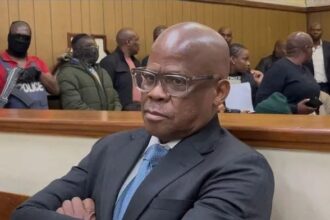
When Kémi Séba appeared in the Pretoria Magistrates Court on Monday morning, 11 May 2026, the anti-establishment activist once again attempted to cast himself as a persecuted political dissident — a victim of powerful governments determined to silence him.
But the details emerging from the hearing tell a far more complicated story.
Séba, whose real name is Stellio Gilles Robert Capo Chichi, is facing charges in South Africa under the Immigration Act relating to allegedly contravening provisions governing lawful entry, residency and documentation. Prosecutors oppose his release while investigations continue. The matter was postponed to 19 May 2026 for further proceedings.
During the bail application, Séba submitted an affidavit portraying himself as a pan-African intellectual targeted for his political beliefs and criticism of Western influence in Africa. Yet the affidavit conspicuously avoids grappling with the deeper geopolitical issue at the heart of the case: his close alignment with Niger’s military junta and his public support for unconstitutional political action in Benin.
That context changes everything.
Séba is not merely a controversial commentator. He has become politically intertwined with one of West Africa’s junta-led governments – Niger – which has been ruled by military authorities since the 2023 coup that overthrew elected president Mohamed Bazoum.
In his own affidavit, read into the court record during the bail proceedings, Séba confirms his close ties with Niger’s ruling military authorities as a special advisor to Niger’s military ruler, General Abdourahamane Tiani. He also carries a Nigerien diplomatic passport. In addition, he placed on record in court that the Niger embassy in South Africa will provide him with accommodation in Pretoria should he be granted bail.
That relationship is especially significant because Niger’s junta has become part of a broader anti-Western political axis in the Sahel, alongside the military governments of Mali and Burkina Faso. These regimes increasingly frame themselves as defenders of African sovereignty while simultaneously weakening democratic institutions and concentrating power in military hands.
Séba’s rhetoric fits neatly into that ideological project.
And nowhere was this clearer than during the attempted coup in Benin in December 2025.
Following the failed putsch against President Patrice Talon’s government, Séba reportedly celebrated the attempted overthrow, describing it as a liberation moment for Benin. Beninese authorities subsequently issued an international arrest warrant against him.
The fallout rapidly escalated into a regional diplomatic crisis.

Benin later expelled Nigerien diplomatic personnel suspected of links to destabilisation efforts surrounding the attempted coup. It was reported that the border between Niger and Benin, which had been closed since 2023, was opened by Niger on the night before the attempted coup. Whether every allegation proves accurate is ultimately secondary to the broader reality: Benin’s democratic government viewed the Niger junta and its allies as active threats to constitutional order.
That places Séba’s political posture in a very different light.
His supporters often portray him as a harmless anti-colonial activist persecuted for challenging France and Western powers. But political activism does not exist in a vacuum. When an individual publicly supports unconstitutional seizures of power while operating within networks linked to military regimes, scrutiny becomes inevitable.
Importantly, Benin’s own handling of Séba over the years undermines claims that he is simply the victim of authoritarian repression.
In 2023, he appeared before a Beninese court on allegations linked to incitement and national security concerns. Yet rather than disappearing into indefinite detention – as often happens under actual authoritarian systems – he was processed through the courts and later released.
That distinction matters.
Benin, despite political tensions and criticism from opposition groups, still subjected Séba to judicial procedure and due process. The same cannot always be said for the military regimes Séba increasingly aligns himself with.
This contradiction sits at the heart of the Pretoria matter.
Séba’s affidavit reportedly attacks institutions, frames legal accountability as political persecution, and invokes pan-African solidarity. But it largely sidesteps the uncomfortable question: why has a self-described freedom activist become so closely associated with governments born from military coups?
South Africa’s Immigration Act charges may appear technical on the surface. But the political implications surrounding the case are anything but minor.
Pretoria is now handling a matter that touches on some of the most volatile trends reshaping Africa today: military juntas presenting themselves as liberators, the weaponisation of anti-Western sentiment, disinformation networks, and the erosion of constitutional norms under the banner of sovereignty.
None of this means Séba is guilty of the charges against him. That remains for the courts to decide.
But the attempt to reduce this case to “an activist being silenced” is intellectually dishonest.
The Pretoria hearing instead revealed a much larger and more troubling reality: the growing convergence between radical populist messaging and military authoritarianism in parts of Africa.
And that is why the next court appearance on 19 May will matter far beyond South Africa’s borders.