

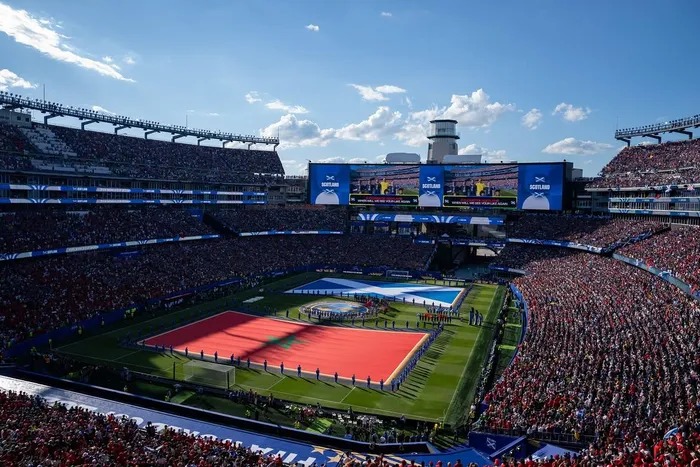
The FIFA World Cup has already delivered unforgettable moments on the pitch, but the stadiums hosting the tournament are becoming attractions in their own right.
As supporters fill venues across the United States, Canada and Mexico, they’re also sharing millions of photos, videos and posts online, with one stadium pulling well ahead of the rest.
A new study by gaming studio Galaxsys has named Gillette Stadium in Foxborough, Massachusetts, as the most Instagrammable venue at the 2026 FIFA World Cup.
The stadium has already welcomed fans for one of the tournament’s knockout matches and continues to generate huge attention online.
According to the study, more than 253,000 Instagram posts feature Gillette Stadium, while its official account has amassed around 640,000 followers with an engagement rate of 18.45%.
The research examined all 16 FIFA World Cup stadiums, measuring their online visibility using Google search data, Instagram activity, YouTube content and Google image results to determine which venues are creating the biggest digital footprint during the tournament.
Gillette Stadium tops the social media rankings
While every FIFA World Cup venue has its own appeal, Gillette Stadium comfortably claimed the top spot when it came to Instagram.
The venue, which is hosting seven matches during the tournament, has become a favourite backdrop for football fans eager to capture the atmosphere.
Its combination of packed crowds, striking architecture and high-profile fixtures has helped make it the most photographed World Cup stadium on Instagram.
The final venue wins the search battle
Although Gillette Stadium dominates social media, MetLife Stadium in New Jersey takes the honours for Google searches.
The venue, which will host the FIFA World Cup final on July 19, attracts an estimated 7.8 million searches every month.
With a capacity of more than 87,000 spectators, it is also one of the largest stadiums at the tournament and has featured in more than 336,000 Instagram hashtag posts.
Historic stadium continues to captivate fans
Mexico City’s legendary Estadio Azteca, officially known as Estadio Banorte, remains one of football’s most iconic venues and continues to capture fans’ attention.
The stadium has become a YouTube favourite, with more than 30,000 videos and channels dedicated to it. It also boasts around 385,000 Instagram followers and over 270,000 posts tagged from supporters visiting the famous ground.
Its long football history has also helped it become the most-reviewed FIFA World Cup stadium on Google, with more than 84,000 reviews.
SoFi Stadium and AT&T Stadium round out the top five
Los Angeles’ SoFi Stadium secured third place thanks to its enormous digital presence.
The venue appears in more than 840 million Google images and features in almost 23,000 YouTube videos. It also attracts around 3.5 million Google searches every month as football fans continue to follow the tournament.
Rounding out the top five is AT&T Stadium in Dallas, the largest venue at this year’s FIFA World Cup with a capacity of about 93,000.
Hosting nine matches, more than any other stadium in the competition, it has become another hotspot for supporters.
More than 157,000 Instagram posts feature the venue, while it receives over four million Google searches every month.
Even covered logos sparked conversation
Hayk Sargsyan, CEO of Galaxsys, said some of the biggest talking points during the tournament have come from FIFA’s strict branding rules rather than the football itself.
“FIFA’s branding rules have made as much online buzz as the football itself. FIFA requires every stadium to cover its sponsor logos for the duration of the tournament, which led to Levi’s draping a white tarp over its iconic batwing sign, and the covered logo became more recognizable than the original. Gillette covered its logo in shaving cream. So both got more press and social media interactions from hiding their branding than they ever would have from showing it.”
As the FIFA World Cup heads towards its latter stages, the battle for attention is not only being played out between the competing nations.
The stadiums themselves have become part of the spectacle, proving that for many fans, the experience extends well beyond the 90 minutes on the pitch.