

Ghana has long occupied a distinctive position in Africa: politically stable, economically influential in West Africa, and increasingly important in continental trade and diplomacy. From cocoa farms and gold mines to fintech startups and the headquarters of the African Continental Free Trade Area (AfCFTA), Ghana represents both the opportunities and contradictions of modern African development.
Located on the Gulf of Guinea in West Africa, the country is one of Africa’s most internationally connected and politically stable countries. Since gaining independence from Britain in 1957 under Kwame Nkrumah, Ghana has developed into a major regional player with influence in diplomacy, trade, mining, agriculture, and democratic governance.
Today, Ghana is often viewed as a gateway to West Africa. Its strategic location, English-speaking business environment, relatively stable institutions, and expanding infrastructure have helped attract international investors, multinational companies, and regional organisations.
At the same time, Ghana faces major economic challenges, including debt pressures, inflation risks, commodity dependence, and the need to create jobs for a young and rapidly urbanising population.
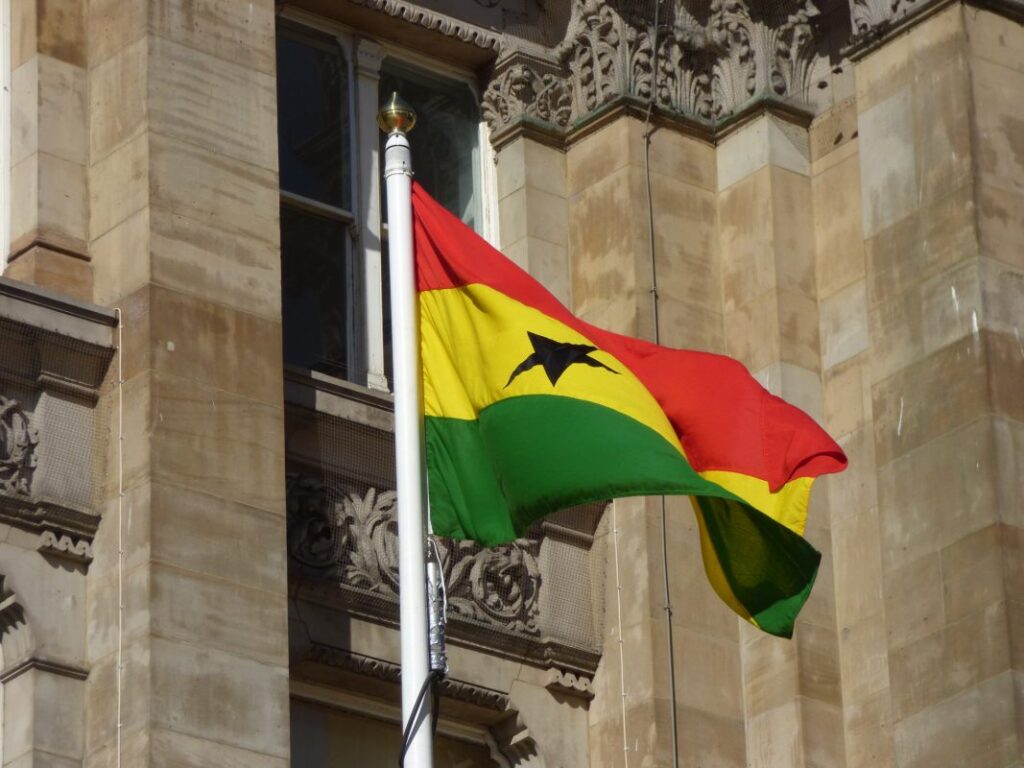
Fast facts
- Capital city: Accra
- Population: Approximately 33 million
- Official language: English
- Currency: Ghanaian Cedi (GHS)
- Regional rlocs: ECOWAS, African Union, AfCFTA, WTO
- Major exports: Gold, cocoa, oil, timber, manganese
Ghana is widely recognised as one of Africa’s more stable democracies, having experienced multiple peaceful transfers of political power since the return to constitutional rule in 1992.
Ghana’s economy
Ghana has one of the more diversified economies in West Africa. Services make up the largest share of GDP, followed by industry and agriculture.
Agriculture: The historic backbone
Agriculture remains central to Ghana’s economy and employment base, especially in rural areas. Millions of Ghanaians depend directly or indirectly on farming.
Key agricultural products include:
- Cocoa
- Cassava
- Maize
- Rice
- Yam
- Plantain
- Palm oil
- Cashew nuts
Ghana is the world’s second-largest cocoa producer and one of the most important suppliers to the global chocolate industry. Cocoa has shaped the country’s economy for decades and remains a major source of export earnings.
Despite its importance, the agricultural sector faces major pressures from climate change, crop disease, smuggling, and fluctuating global commodity prices. Recent years have seen growing concern around declining cocoa yields and the impact of environmental stress on farming communities.
Mining and natural resources
Mining is one of Ghana’s most powerful economic engines.
- Gold
Ghana is Africa’s leading gold producer and among the world’s major exporters of the mineral. Gold exports generate significant foreign exchange and play a crucial role in supporting government revenues and currency stability.
- Other minerals include:
- Bauxite
- Manganese
- Diamonds
- Lithium and critical minerals (emerging sector)
The mining sector has attracted substantial international investment, but debates continue over environmental destruction, illegal mining (“galamsey”), and the distribution of resource wealth.
Oil and Gas
Ghana entered the oil-producing era in 2010 following major offshore discoveries, particularly at the Jubilee oil field.
Oil production transformed the economy by increasing export revenues and attracting foreign investment. However, dependence on oil prices also exposed Ghana to global market volatility.
The government continues to pursue new offshore exploration projects while also trying to strengthen local energy infrastructure.
Services and the Digital Economy
The services sector is now the largest contributor to Ghana’s GDP and includes:
- Banking and finance
- Telecommunications
- Retail trade
- Tourism
- Logistics
- ICT and fintech
Recent growth has been driven strongly by finance, telecommunications, and digital services.
Mobile Money and Fintech
Ghana has become one of Africa’s major fintech markets. Mobile money platforms have transformed how people transfer money, save, and conduct business.
Accra has emerged as a growing technology hub with increasing investment in startups, e-commerce, and digital financial services.
Ghana’s geopolitical importance
Ghana is often viewed as a stabilising political force in West Africa. While several neighbouring countries have experienced coups or political instability in recent years, Ghana has maintained democratic continuity and constitutional governance.
This has strengthened its diplomatic standing within:
- ECOWAS
- The African Union
- The United Nations system
Accra regularly hosts international conferences, diplomatic summits, and regional negotiations.
The AfCFTA headquarters
One of Ghana’s most important geopolitical achievements was securing the headquarters of the African Continental Free Trade Area (AfCFTA) Secretariat in Accra.
AfCFTA aims to create the world’s largest free trade area by connecting African markets under a common trade framework. Ghana’s hosting of the institution reinforces its position as a continental commercial and diplomatic hub.
The country hopes this role will strengthen:
- Regional trade
- Logistics
- Financial services
- Manufacturing
- Investment inflows
Gateway to West Africa
Ghana’s ports, infrastructure, and business environment make it an important commercial gateway into the ECOWAS region, which includes more than 400 million people.
Compared to several neighbouring states, Ghana is often perceived as offering:
- Stronger institutional stability
- Lower political risk
- Easier business operations
- Better legal predictability
This has helped Accra become a preferred base for many multinational firms operating in West Africa.
Major economic trends
Economic recovery and stabilisation
After severe economic stress between 2022 and 2023, Ghana has undergone a period of macroeconomic stabilisation supported by IMF reforms and tighter fiscal policies. Recent reports indicate stronger GDP growth, improved reserves, and lower inflation compared to the crisis period.
However, challenges remain:
- Public debt pressures
- Infrastructure financing gaps
- High youth unemployment
- Dependence on commodity exports
Push for industrialization
Ghana increasingly seeks to move beyond exporting raw materials toward value-added production.
Government strategies focus on:
- Agro-processing
- Manufacturing
- Textiles
- Industrial parks
- Local processing of minerals and agricultural products
The broader goal is to reduce dependence on imports while creating jobs domestically.
Urbanisation and youth growth
Ghana has a young and rapidly urbanising population. Cities such as Accra and Kumasi continue to expand quickly, creating both opportunity and pressure.
This urban growth is driving:
- Real estate development
- Consumer markets
- Digital services
- Transportation demand
At the same time, governments face rising expectations around employment, housing, education, and infrastructure.
Energy and infrastructure development
Infrastructure expansion remains central to Ghana’s long-term ambitions.
Key priorities include:
- Roads and highways
- Ports and logistics
- Electricity generation
- Digital infrastructure
- Renewable energy
Reliable infrastructure is seen as essential if Ghana hopes to become a manufacturing and regional trade hub.
Ghana stands at an important crossroads in African development. It combines democratic stability, natural resource wealth, growing digital innovation, and strategic regional influence. Few African countries have managed to build such a strong international reputation while maintaining relatively stable democratic institutions.
Yet Ghana’s future will depend on whether it can successfully transition from a commodity-dependent economy into a more industrialised, diversified, and value-added economic system.
If it succeeds, Ghana could strengthen its position not only as a gateway to West Africa, but as one of the continent’s most important economic and diplomatic centres in the decades ahead. – AfricaNews360