

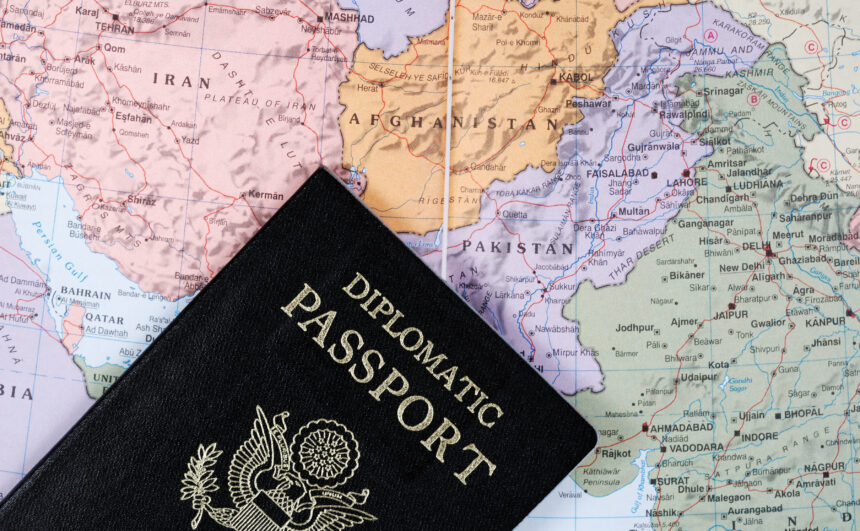
Diplomatic passports in a fragmenting world: Privilege, power, and the Kémi Séba test case
In an era where sovereignty is contested, alliances are shifting, and non-state actors wield increasing influence, the diplomatic passport – once a quiet instrument of statecraft – has become a visible symbol of geopolitical tension.
Few cases illustrate this better than that of Kémi Séba, the controversial activist travelling on a diplomatic passport issued by Niger’s post-coup military government, now at the centre of legal scrutiny in South Africa.
His situation forces a deeper question: what is a diplomatic passport today – an instrument of diplomacy, or a tool vulnerable to political manipulation?
What makes a diplomatic passport “special”?
At its core, a diplomatic passport is not just a travel document; it is an extension of state authority. It signals that the bearer represents a government in an official capacity and may be entitled to certain privileges under international law, primarily derived from the Vienna Convention on Diplomatic Relations.
These privileges can include:
- Facilitated visa processes or visa exemptions
- Priority treatment at borders
- In some cases, immunities from arrest or prosecution (but only when formally accredited as a diplomat in a host country)
However, the key misconception is this: a diplomatic passport does not automatically grant immunity. Immunity depends on accreditation and function – not the document alone.
This distinction is precisely where controversies emerge.
The Kémi Séba case: When diplomacy meets politics
Kémi Séba’s possession of a Niger-issued diplomatic passport – granted after he aligned with the country’s military leadership – highlights the politicisation of such documents.
His subsequent arrest in South Africa for immigration violations, alongside investigations into the authenticity and use of his passport, underscores a critical legal reality: host states are not obliged to recognise or honour diplomatic status without proper accreditation.
In practical terms:
- A country can question the legitimacy of the passport
- It can deny privileges or immunity
- It can pursue criminal or immigration proceedings if misuse is suspected
This is not a breakdown of diplomatic norms, it part of their enforcement.
Misuse and legal consequences
Misusing a diplomatic passport can trigger a range of legal and diplomatic responses:
- Domestic legal action. If a holder is not officially recognised as a diplomat:
-
- They are subject to local immigration laws
- They can be detained, prosecuted, or deported
- Diplomatic repercussions:
-
- The issuing country may face formal protests or reputational damage
- The individual may be declared persona non grata
- International law considerations. Under international law:
-
- Immunity applies only when the individual is properly notified and accepted by the host state
- Abuse of privileges can lead to withdrawal of recognition
South Africa’s own policies make this clear: even accredited diplomatic communities are expected to respect domestic laws, and authorities may refuse to intervene in legal enforcement.
African Union guidelines: Symbolism vs reality
The African Union has attempted to standardise and elevate the role of diplomatic travel documents through initiatives like the AU passport and Agenda 2063 frameworks.
Yet, AU-related diplomatic passports come with strict limitations:
- They are primarily identification tools, not substitutes for national passports
- They are restricted to official functions and diplomatic engagements
- They do not automatically confer visa-free travel or legal immunity
Moreover, AU policy frameworks emphasise that:
- Member states retain control over issuance
- Passports must comply with national laws and international standards
In other words, the AU promotes mobility and unity – but not at the expense of legal order.
A broader African dilemma
The Séba case reflects a wider continental tension:
- Military governments and transitional regimes may use diplomatic passports to legitimise allies or extend influence
- Activists and political actors may leverage them to circumvent restrictions
- Host nations must decide whether to prioritise diplomatic courtesy or legal integrity
This creates a fragmented system where:
- The same passport may be honoured in one country and challenged in another
- The line between state representative and political actor becomes blurred
Is it time to re-anchor diplomatic privilege?
Diplomatic passports were designed for a world of relatively stable states and clearly defined diplomatic roles. That world is changing.
If they are to retain legitimacy:
- The issuing of diplomatic passports must be tightened: not every political ally or advisor should qualify for diplomatic status
- Continental standards must be enforced, not just declared: the AU’s frameworks need binding mechanisms, not symbolic guidelines
- Host states must remain vigilant: respect for diplomacy cannot come at the expense of sovereignty or law
Credibility test
Kémi Séba’s case is not just about a single person or a single passport – it is a test of the credibility of diplomatic systems in Africa and beyond.
In a rapidly shifting geopolitical landscape, the diplomatic passport sits at the centre of privilege, politics, and power. Whether it remains a respected instrument of international cooperation – or becomes a loophole for influence – will depend on how firmly states uphold the principle that diplomatic privilege is earned through function, not conferred through convenience. – Africa360News