

Pretoria — Controversial Beninese political activist Kémi Séba appeared briefly in the Pretoria Regional Court this week, as legal and diplomatic questions mount over whether South Africa could extradite him to Benin for alleged involvement in a failed coup attempt.
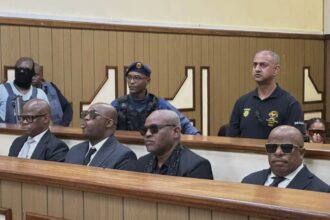
Séba, born Stellio Gilles Robert Capo Chichi, was arrested on 13 April 2026 at a shopping mall in Pretoria in what police describe as a coordinated sting operation. He appeared in court on Monday, 20 April 2026, alongside his 18-year-old son, Khonsou Seba Capo Chichi, and a South African co-accused, François van der Merwe. The trio has been remanded in custody, with the case postponed to 29 April for a formal bail application.
At the heart of the case are competing claims that straddle immigration law, criminal allegations, and international relations within West Africa’s ECOWAS (Economic Community of West African States) bloc.

Allegations and legal uncertainty
Authorities in Benin are seeking Séba’s return, accusing him of encouraging rebellion linked to a failed coup attempt on 7 December 2025. During that incident, a group of soldiers briefly claimed to have overthrown President Patrice Talon before the uprising was swiftly contained with support from regional forces.
South African police say Séba was found with more than R315 000 in cash at the time of his arrest. Investigators allege the funds were connected to plans to move him and his son across borders.
According to police spokesperson Colonel Katlego Mogale, the third accused, van der Merwe, is suspected of being paid to facilitate an illegal crossing into Zimbabwe, from where the group allegedly intended to travel onward to Europe.
Further complicating the case are questions around Séba’s immigration status. Authorities say he may have overstayed his visa by approximately two months after living in South Africa for around five months. Investigations are ongoing to verify the group’s legal status in the country and their residential details.
There is also confusion over Séba’s legal strategy. One lawyer initially indicated that an asylum application had been filed on his behalf in South Africa. However, individuals close to Séba have since denied that any such application exists and dispute the lawyer’s current involvement in the case.
A case beyond the courtroom
While the immediate proceedings focus on bail and immigration compliance, the broader implications extend into regional politics and security. Séba is reportedly wanted in both Benin and France for alleged offences related to crimes against the state. His potential extradition raises sensitive questions about sovereignty, political activism, and the limits of cross-border accountability within ECOWAS and beyond.
The case also highlights the increasingly transnational nature of political movements in West Africa, where digital influence, ideological alignment, and shifting geopolitical loyalties intersect with domestic instability.
Fast Facts: Who is Kémi Séba?
- Full Name: Stellio Gilles Robert Capo Chichi
- Origins: Born in France to Beninese parents; formerly held French citizenship, which was revoked in 2024
- Political Profile: Self-proclaimed pan-African activist known for strong opposition to France’s role in Africa and advocacy for African sovereignty
- Ideological Positioning: Frequently aligned with anti-Western narratives; publicly supportive of military-led governments in parts of the Sahel
- Controversies:
- Convicted in France for inciting racial hatred
- Expelled or restricted from several African countries
- Accused by authorities in Benin of encouraging rebellion linked to a failed coup
- Geopolitical Alignment: Viewed as sympathetic to Russia’s growing influence in parts of Africa – particularly that of the former Wagner Group, also known as the Africa Corps, and particularly in countries distancing themselves from former colonial powers
- Influence: Commands a significant online following and has played a visible role in protest movements critical of ECOWAS leadership and Western partnerships
Why this case matters
Séba’s court case is more than a legal dispute, sitting at the intersection of law, politics, and regional stability. ECOWAS has faced increasing pressure in recent years from coups and anti-establishment movements across West Africa. Figures like Séba, who challenge existing political and international alignments, are seen by critics as amplifying narratives that can contribute to instability.
As South African courts weigh the legal merits of the case, the outcome could set an important precedent for how politically exposed individuals operating across borders are treated, and how far states are willing to go in balancing legal process with regional security concerns.