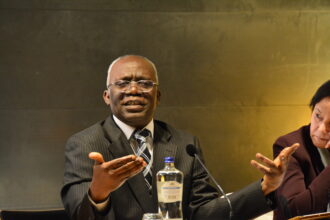


There is something deeply unusual about the travel patterns of Kémi Séba.
Not unusual in the sense that political activists travel. They do. Especially transnational political figures who build influence across borders, movements and ideologies. Pan-Africanism itself has always travelled – from Accra to Dakar, from Algiers to Johannesburg, from Harlem to Ouagadougou. The circulation of ideas, organisers and rhetoric is part of the tradition.
What makes Séba’s movements unusual is the pattern, the timing, the legal contradictions and the apparent invisibility surrounding them.
During the Pretoria Magistrate’s Court bail proceedings, prosecutors laid out a striking record of repeated entries into and exits from South Africa throughout 2025. According to the State, Séba entered South Africa in May 2025, left in June, returned in July, departed again in August, re-entered in September, exited in November, and then entered once more at the end of November before remaining in the country until his arrest in April 2026.
On paper, these are simply immigration movements.
In context, they raise far more difficult questions.
The first is why South Africa became such a consistent operational base for him.
The defence argues that Séba is a globally recognised Pan-African activist whose movements are public, political and ideological. That may be true. But political prominence alone does not explain why someone who claims to fear persecution in Benin repeatedly moved in and out of South Africa without applying for asylum – until after arrest.
That contradiction sits at the centre of the State’s argument.
If South Africa represented political refuge, why was asylum never pursued during months of lawful presence in the country? Why continue travelling freely across borders if the threat environment was supposedly urgent and immediate? Why only invoke refugee protections once criminal proceedings began?
The defence insists this delay can legally be explained. South African refugee law does permit asylum claims after unlawful stay if “good cause” is shown. Legally, that argument may ultimately succeed.
Politically, however, the timeline remains difficult to ignore.
Then there is the issue of movement itself.
The State’s allegations – still untested – describe not an ordinary departure from South Africa, but an alleged clandestine extraction operation. Guest houses. Multiple transfers. Rooftop parking areas. A planned border crossing outside formal ports of entry. Missing cell phones. Instructions allegedly designed to avoid digital detection.
Even stripped of prosecutorial rhetoric, the scenario is extraordinary.
And it becomes even stranger when viewed alongside Séba’s public image.
This is not an underground insurgent hiding from visibility. Séba is a media personality who thrives on visibility. He broadcasts constantly. He frames himself as the intellectual face of militant anti-neocolonialism in Francophone Africa. His politics depend on spectacle, performance and public confrontation.
Yet the travel pattern presented in court suggests somebody simultaneously seeking invisibility.
That duality matters.
The defence says the State is criminalising political dissent. The State says it is confronting a politically connected fugitive attempting to evade lawful processes. Somewhere between those positions lies the deeper issue: the emergence of a new class of transnational political actors who operate in the grey zones between activism, diplomacy, intelligence networks and digital influence.
Séba appears to occupy exactly that terrain.
His links to Niger are particularly revealing. The court heard that he travelled on a Nigerien diplomatic passport and reportedly served as a special adviser to Niger’s president. That alone changes the nature of the discussion. Diplomatic affiliation is not merely symbolic; it suggests political protection, strategic relationships and state-level alignment.
This creates an uncomfortable question for South Africa.
Was Séba simply another activist moving through the country, or had South Africa become a temporary geopolitical staging ground in a much larger West African political struggle?
Because the deeper one looks at the record presented in court, the harder it becomes to see this as a conventional immigration case.
The State repeatedly framed Séba as somebody with international reach, logistical support and sophisticated operational awareness. The defence portrayed him as a persecuted dissident exercising political freedom. Both narratives may contain elements of truth.
But neither fully explains the strange geography of his movements.
Why the repeated cycling through South Africa? Why the extended stays? Why the alleged attempt to leave outside official channels? Why the diplomatic protection? Why the timing of the asylum application? Why the apparent effort to disappear physically while remaining hyper-visible politically online?
The Pretoria proceedings may ultimately determine questions of bail, extradition and immigration status. But they have already exposed something larger: South Africa’s growing role as a crossroads for continental political conflicts that increasingly blur the boundaries between ideology, exile, intelligence and law.
And in the centre of that strange map stands Kémi Séba – travelling constantly, visible everywhere, yet somehow difficult to fully locate. – Africa360News