
Johannesburg — The arrest of controversial Pan-African activist Kémi Séba in South Africa and a looming extradition request from Benin are more than routine legal matters – they are flashpoints in a wider struggle over governance, stability, and the limits of political activism across the African continent.
Speaking to SABC’s Channel Africa, Chris Maroleng, CEO of Africa 360 Advisory, emphasised that the case must be understood within the context of growing instability in West Africa, particularly in the Economic Community of West African States (ECOWAS) region.
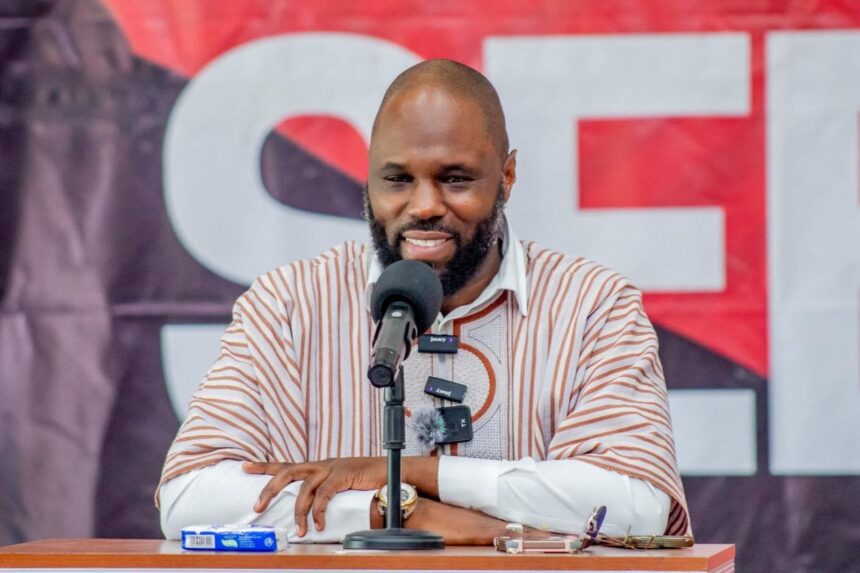
Séba, whose real name is Stellio Gilles Robert Capo Chichi, was arrested in Pretoria last week and briefly appeared in court on Monday, 20 April 2026. He remains in custody pending a bail hearing scheduled for 29 April. Authorities in Benin are reportedly preparing to request his extradition on charges of inciting rebellion linked to an alleged failed coup attempt in December.
More Than a Legal Case
While some view the matter as a straightforward legal process involving a polarising political figure, Maroleng said it reflects deeper structural challenges in West Africa.
“This stems from a deep understanding of what’s going on in the region,” he said, pointing to a rise in unconstitutional changes of government, particularly in the Sahel.
According to Maroleng, economic pressures and declining public trust in governance institutions have created conditions where military interventions and anti-establishment movements gain traction. In this environment, figures like Séba position themselves as alternatives to traditional political systems.
However, Maroleng challenged that framing, arguing that such actors contribute to instability rather than reform.
“What they are actually doing is creating greater instability and encouraging unconstitutional changes of power… through the barrel of the gun,” he said.
Allegations And Security Concerns
The extradition case is expected to hinge on the seriousness of the allegations against Séba, which prosecutors in Benin are likely to frame as a national security threat.
Maroleng noted that Séba has been linked not only to the recent alleged coup attempt but also to broader networks of extremist and anti-government actors. He further claimed that Séba’sassociations extend beyond West Africa, including controversial links to foreign paramilitary groups operating in parts of the continent.
“These elements will weigh heavily in any extradition proceedings,” he said, suggesting that the case presented to South African courts could portray Séba as a destabilising force.
Balancing law and freedom
The case also raises complex legal and ethical questions for South Africa, particularly around balancing its constitutional protections of free expression with its international obligations.
South Africa and Benin both operate under constitutional democracies that guarantee freedoms of speech and association. However, Maroleng said these rights would need to be weighed against the potential risks posed by political actors accused of inciting unrest.
“The rule of law… will be the ultimate litmus test,” he said.
He added that regional cooperation frameworks — including ties between the Southern African Development Community (SADC) and ECOWAS — could influence how seriously South Africa considers the extradition request.
A precedent in the making?
Legal analysts say the outcome of the case could set an important precedent for how African states handle cross-border political activism, particularly when it intersects with allegations of incitement or insurrection.
For regional bodies like ECOWAS, the stakes are equally high.
Maroleng said ECOWAS has a mandate not only to promote economic integration but also to uphold regional stability through collective security mechanisms. In recent years, the bloc has faced mounting challenges from a wave of coups in countries such as Mali, Burkina Faso, and Niger.
“The organisation would be interested in curbing the activities of those who seek to emulate these unconstitutional changes of power,” he said.
A Test Case For The Continent
As Séba awaits his next court appearance, the case is shaping into a critical test of how African democracies navigate the fine line between protecting political freedoms and preventing destabilisation.
Beyond the courtroom, it underscores a broader continental debate: where legitimate dissent ends and actions that threaten democratic order begin. – Africa360News