
In a region often defined by political volatility and uneven development, Benin has steadily built a reputation as one of West Africa’s more stable and institutionally consistent states. Though smaller than regional heavyweights like Nigeria or Ghana, Benin punches above its weight in shaping the direction of the Economic Community of West African States (ECOWAS), particularly in governance, economic reform, and regional cooperation.
A Snapshot of Benin
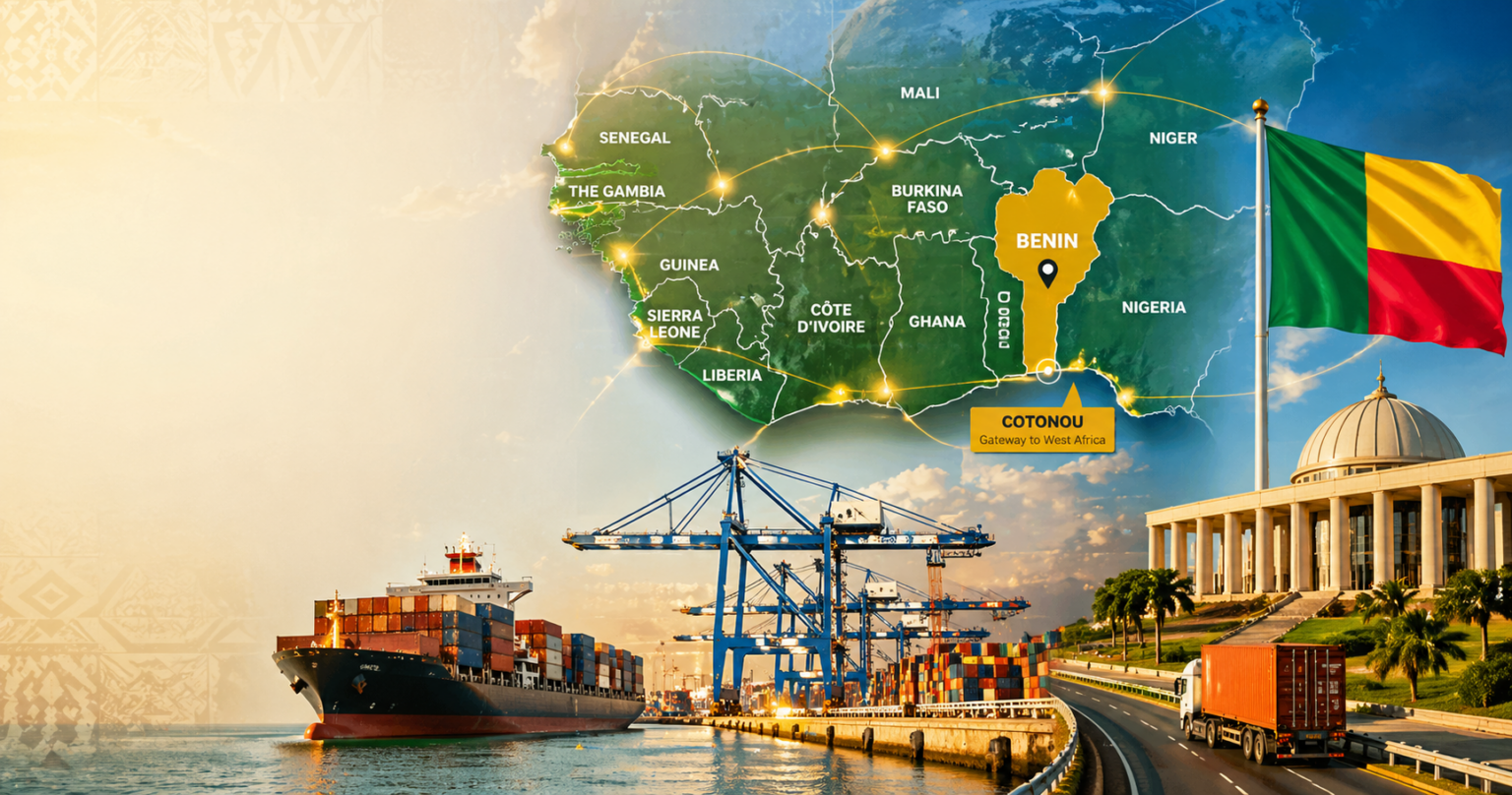
Located along the Gulf of Guinea, Benin sits at a strategic crossroads between West Africa’s coastal economies and the Sahel. It shares borders with Togo, Nigeria, Burkina Faso, and Niger, placing it at the heart of regional trade routes and security dynamics.
Once known as the Kingdom of Dahomey, Benin gained independence from France in 1960. After a period of political instability and Marxist rule, it transitioned to democracy in 1990, becoming one of the first African countries to do so through a national conference process – a model later studied across the continent.

Why Benin matters in ECOWAS
- A record of political stability
Benin has long been viewed as a relatively stable democracy in a region prone to coups and constitutional crises. While its political system has faced criticism in recent years, particularly around electoral reforms and opposition space, it has largely maintained constitutional continuity.
For ECOWAS, which positions itself as a guardian of democratic norms, countries like Benin provide:
- A reference point for civilian governance
- Institutional continuity within regional decision-making
- Diplomatic credibility in advocating for constitutional order
- Economic reform and growth strategy
Benin has pursued an ambitious reform agenda aimed at modernising its economy and improving governance. Central to this has been the Government Action Programme (Programme d’Actions du Gouvernement, PAG), which focuses on:
- Infrastructure development (roads, ports, energy)
- Agricultural value chains (particularly cotton, Benin’s main export)
- Tourism and cultural industries
- Public sector efficiency and digitalisation
Its Port of Cotonou is a critical regional asset, serving as a gateway for landlocked countries like Niger and Burkina Faso. This positions Benin as a logistical hub within ECOWAS, facilitating trade across borders.
- Commitment to regional integration
Benin has consistently aligned itself with ECOWAS goals, particularly:
- Supporting the free movement of people and goods
- Participating in regional infrastructure corridors
- Backing the long-term vision of a common currency (the Eco)
As a member of the West African Economic and Monetary Union (WAEMU/UEMOA), Benin already shares a common currency (the CFA franc) with several ECOWAS states, giving it practical experience in monetary integration.

- Security cooperation in a fragile region
Benin lies on the southern edge of the Sahel, a region increasingly affected by extremist violence. While historically more secure than its northern neighbours, it has faced rising threats in its northern regions.
In response, Benin has:
- Increased cooperation with ECOWAS and regional security partners
- Invested in border security and counter-terrorism efforts
- Positioned itself as part of a broader regional response to instability
This role is increasingly important as ECOWAS grapples with how to address security crises while maintaining political cohesion.
Key Strengths
- Strategic geography: A coastal gateway linking the Sahel and coastal economies
- Functional institutions: A consistent administrative and governance framework
- Trade infrastructure: The Port of Cotonou is a regional lifeline
- Policy alignment: Strong adherence to ECOWAS integration goals
Ongoing Challenges
Benin’s position is not without complexity, and its leadership role within ECOWAS is shaped by several tensions:
- Political concerns
Recent elections have drawn criticism over restrictions on opposition participation and media space. This raises questions about how Benin balances internal political control with ECOWAS’s democratic principles. - Economic dependence on trade flows
Benin’s economy is closely tied to trade, particularly with Nigeria. Border closures or policy shifts in neighbouring countries can have immediate economic consequences. - Security pressures from the north
The spread of extremist activity into northern Benin highlights the fragility of regional stability and the limits of national responses without deeper ECOWAS coordination. - Coup disruptions in the region
A wave of military coups in West Africa, including in Mali, Burkina Faso, and Niger, has disrupted ECOWAS cohesion and strained its authority. These developments create a more volatile neighbourhood for Benin, affecting:
- Regional trade routes
- Security coordination
- Diplomatic alignment within ECOWAS
For countries like Benin that rely on a rules-based regional order, the normalisation of military rule in parts of ECOWAS presents both a political and strategic challenge.
- Influence of anti-establishment and destabilising narratives
Figures such as Kémi Séba (who is wanted in Benin for supporting an attempted coup at the end of 2025) have gained prominence across parts of West Africa by promoting strong anti-Western, anti-ECOWAS, and anti-establishment narratives. While they resonate with segments of the population frustrated by inequality and external influence, their messaging often:
- Undermines trust in regional institutions
- Legitimises unconstitutional political change
- Fuels polarisation and distrust of democratic processes
For Benin, and ECOWAS more broadly, this presents a complex challenge: how to respond to legitimate public grievances without allowing narratives that encourage instability or erode constitutional order to take root.
Benin And the Future of ECOWAS
Benin represents a particular model of leadership within ECOWAS based not on size or dominance, but on alignment, consistency, and reform. It demonstrates how mid-sized states can shape regional outcomes by:
- Acting as reliable partners in multilateral frameworks
- Investing in infrastructure that benefits the wider region
- Supporting norms around governance and integration
As ECOWAS navigates internal divisions, security crises, and questions about its credibility, countries like Benin play a crucial role in holding together the idea of a rules-based regional order.
Fast facts: Benin
- Capital: Porto-Novo (official), Cotonou (economic centre)
- Population: ~13 million
- Official Language: French
- Currency: West African CFA franc (XOF)
- Key Export: Cotton
- Regional Role: Trade gateway, reform-oriented economy, ECOWAS-aligned state
The Broader Lesson
Benin presents an important reality about regional integration: leadership does not always come from the largest economies. It often comes from countries that consistently invest in institutions, align with shared goals, and act as connectors within a wider system.
In ECOWAS, Benin is one of those connectors, quietly impacting the region’s trajectory. – Africa360News