
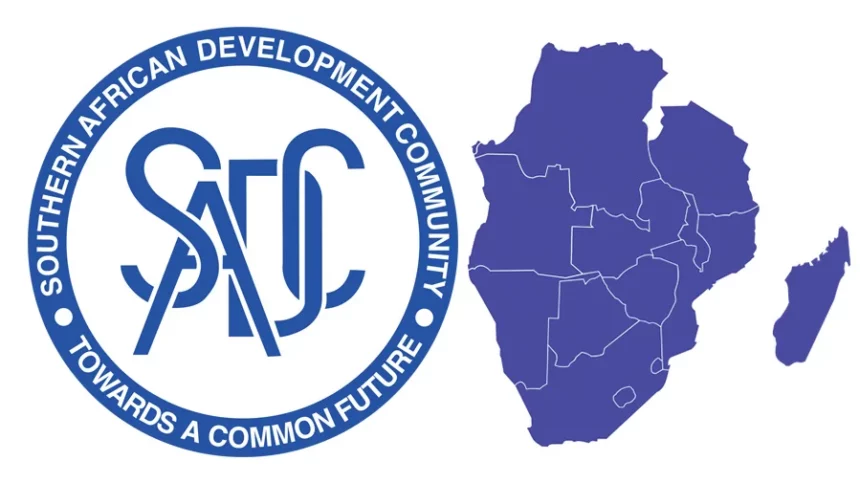
The Southern African Development Community (SADC) is one of Africa’s most important regional organisations, bringing together 16 member states across southern Africa in a shared effort to promote economic integration, political cooperation, peace, and social development.
Founded in 1980 as the Southern African Development Coordination Conference (SADCC), the organisation initially focused on reducing the region’s economic dependence on apartheid-era South Africa. In 1992, it evolved into SADC, reflecting a broader ambition: creating a stable, integrated, and prosperous southern African region.
Today, SADC includes Angola, Botswana, Comoros, the Democratic Republic of Congo, Eswatini, Lesotho, Madagascar, Malawi, Mauritius, Mozambique, Namibia, the Seychelles, South Africa, Tanzania, Zambia, and Zimbabwe.
Why SADC matters
Southern Africa is home to some of the continent’s most strategic economies, major mineral reserves, agricultural regions, ports, and transport corridors. SADC’s importance lies in its ability to coordinate development across borders in a region where economies, infrastructure, migration, trade, and security are deeply interconnected.
Its core objectives include:
- Promoting sustainable economic growth
- Reducing poverty
- Enhancing regional peace and security
- Expanding intra-African trade
- Supporting infrastructure development
- Encouraging democratic governance and political cooperation
- Improving education, healthcare, and social welfare
In many ways, SADC represents a practical example of Africa’s broader continental vision embodied in the African Continental Free Trade Area (AfCFTA) and the African Union’s Agenda 2063.
Economic integration and trade
One of SADC’s central goals is regional economic integration. The bloc established the SADC Free Trade Area in 2008, aimed at reducing tariffs and making it easier for goods and services to move across borders.
The region possesses enormous economic potential:
- South Africa serves as Africa’s most industrialised economy
- The DRC and Zambia are major copper producers
- Botswana is renowned for diamond mining
- Angola is a leading oil producer
- Tanzania and Mozambique have growing natural gas sectors
- Mauritius and Seychelles are important financial and tourism hubs
By improving cooperation among these economies, SADC seeks to create regional value chains rather than relying solely on exporting raw materials to external markets.
Infrastructure is central to this strategy. SADC has prioritised transport corridors, ports, railways, energy grids, and telecommunications systems that connect landlocked countries to regional and global markets.
Projects such as the North-South Corridor, linking Durban in South Africa to the DRC, are designed to lower trade costs, improve logistics, and stimulate industrialisation.
SADC also plays a major role in regional energy cooperation through the Southern African Power Pool (SAPP), which enables member states to share electricity resources across borders. This cooperation is increasingly important as many African countries face energy shortages and growing industrial demand.
Peace, security, and conflict resolution
Economic growth is impossible without stability, and SADC has increasingly become involved in regional peacekeeping and diplomatic mediation.
The organisation operates through its Organ on Politics, Defence and Security Cooperation, which focuses on:
- Conflict prevention
- Electoral observation
- Mediation efforts
- Counterterrorism cooperation
- Peacekeeping support
SADC has intervened diplomatically and militarily in several regional crises over the years.
In recent years, one of its most visible security interventions has been in northern Mozambique, where extremist insurgents linked to Islamic State destabilised Cabo Delgado province. SADC deployed the SADC Mission in Mozambique (SAMIM) to support the Mozambican government in restoring stability and protecting civilians.
The organisation has also played mediation roles in political crises in Zimbabwe, Lesotho, Madagascar, and the Democratic Republic of Congo.
While critics sometimes argue that SADC can be slow, cautious, or overly diplomatic in responding to crises, its role remains critical in preventing regional instability from escalating into wider conflict.
Social development and regional cooperation
Beyond economics and security, SADC also works on improving social conditions across the region.
The organisation coordinates policies on:
- Public health
- Education and skills development
- Gender equality
- Food security
- Climate resilience
- Migration management
- Disaster response
This cooperation became especially important during health crises such as HIV/AIDS and Covid-19, where regional coordination helped strengthen public health responses.
Southern Africa remains one of the regions hardest hit by climate change, drought, food insecurity, and extreme weather events. SADC increasingly views climate adaptation and sustainable development as central to long-term regional stability.
Challenges facing SADC
Despite its ambitions, SADC faces significant challenges.
The region remains marked by:
- High unemployment
- Deep inequality
- Infrastructure gaps
- Political instability in some member states
- Corruption
- Dependence on commodity exports
- Energy shortages
- Slow industrialisation
Trade between African countries also remains lower than in many other parts of the world, partly because of weak transport systems, customs barriers, and differing national regulations.
Political tensions can also complicate collective decision-making. SADC operates largely through consensus, which can slow action during crises.
There are also growing geopolitical pressures as global powers compete for influence and resources in Africa, particularly in sectors such as mining, energy, and critical minerals.
SADC’s strategic importance for Africa
Despite these obstacles, SADC remains one of Africa’s most influential regional blocs because it demonstrates how regional cooperation can strengthen economic resilience and political stability.
Its importance extends beyond southern Africa.
A stable and economically integrated southern African region contributes to:
- Continental trade expansion
- African industrialisation
- Energy security
- Food security
- Cross-border infrastructure development
- Greater African bargaining power globally
As Africa seeks to reduce dependency on external powers and strengthen intra-African cooperation, organisations such as SADC are becoming increasingly important.
The success or failure of regional organisations like SADC will shape whether Africa can transition from fragmented national economies into a more connected and competitive continental market.
Ultimately, SADC’s long-term significance lies in its attempt to balance economic growth, political stability, and social development across one of the continent’s most strategically important regions.