




Nigeria: Africa’s giant at a crossroads
By almost any measure, Nigeria is impossible to ignore.
It is Africa’s most populous nation, one of its largest economies, a cultural powerhouse and a geopolitical heavyweight whose influence stretches far beyond West Africa. From the music of Afrobeats stars filling global charts to the oil exports shaping international energy markets, Nigeria occupies a unique and often contradictory position on the continent.
Rich in resources, talent and entrepreneurial energy, Nigeria has long been viewed as a country of immense promise. Yet it is also a nation wrestling with insecurity, inequality, infrastructure gaps and political pressures that continue to test its stability.
To understand modern Africa, many analysts argue, one must first understand Nigeria.
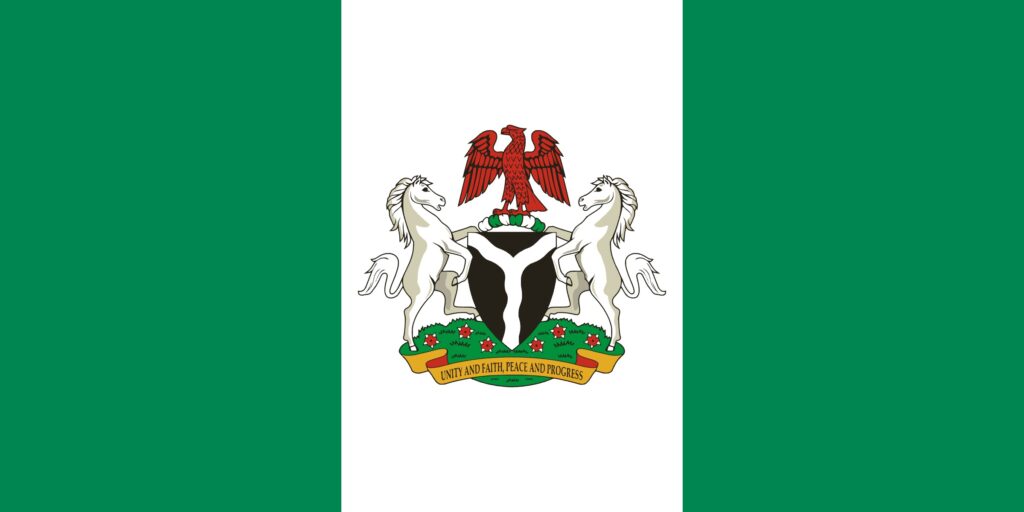
The giant of Africa
Situated on the Gulf of Guinea in West Africa, Nigeria borders Benin, Niger, Chad and Cameroon. It is home to more than 220 million people, making it not only Africa’s largest population centre, but one of the largest countries in the world by population.
Its sheer size gives Nigeria extraordinary influence. Economically, politically and culturally, developments in Nigeria often ripple across the African continent.
The country gained independence from Britain on 1 October 1960 and today operates as a federal republic made up of 36 states and the Federal Capital Territory, Abuja. While Abuja serves as the political capital, Lagos remains the economic heartbeat of the nation — a sprawling megacity of commerce, technology, traffic and opportunity.
Lagos is frequently described as a city that captures the essence of Nigeria itself: energetic, ambitious, chaotic and constantly evolving.
Oil wealth and economic power
Nigeria’s modern economy has been deeply shaped by oil.
The country is one of Africa’s largest petroleum producers and possesses enormous reserves of natural gas. Since the discovery of commercial oil in the Niger Delta in the 1950s, hydrocarbons have dominated government revenues and export earnings.
Oil transformed Nigeria into a strategically important state, drawing the attention of global powers and multinational corporations alike. Membership in OPEC further elevated Nigeria’s standing within international energy politics.
But oil wealth has also created vulnerability.
Heavy dependence on petroleum exports has exposed the economy to global price fluctuations, currency instability and recurring fiscal crises. When oil prices fall, Nigeria often faces pressure on public finances, foreign reserves and inflation.
The oil industry has additionally fuelled longstanding tensions in the Niger Delta, where communities have protested environmental degradation, pollution and unequal distribution of resource wealth.
Beyond oil: Agriculture and innovation
Despite the dominance of petroleum, millions of Nigerians continue to depend on agriculture for survival and employment.
Nigeria produces crops such as cassava, cocoa, rice, maize, yams and palm oil, and the sector remains essential to food security. In recent years, policymakers have increasingly emphasised agricultural development as part of broader efforts to diversify the economy away from oil dependence.
At the same time, Nigeria has emerged as one of Africa’s leading centres of technological innovation.
Lagos in particular has become a major hub for fintech startups, digital payments, mobile banking and e-commerce. Young entrepreneurs have built companies designed to solve uniquely African challenges, from payment systems to logistics and online retail.
This digital transformation has helped position Nigeria as one of the continent’s most dynamic startup ecosystems.
A youthful population, rising smartphone usage and expanding internet access have accelerated the country’s technological growth, even amid infrastructure and electricity challenges.
A cultural superpower
Nigeria’s global influence extends far beyond economics.
The country’s entertainment industry has become one of Africa’s most powerful forms of soft power. Nollywood, Nigeria’s film industry, is among the largest in the world by output and reaches audiences across Africa and the diaspora.
Meanwhile, Nigerian music has reshaped global popular culture. Afrobeats artists have filled international arenas, topped streaming charts and introduced millions worldwide to Nigerian sounds, language and fashion.
This cultural influence has helped redefine international perceptions of Africa, presenting Nigeria not only as a political or economic actor, but also as a creative force with global reach.
Nigeria’s geopolitical role
Nigeria occupies a pivotal geopolitical position within Africa.
As the largest economy and military power in West Africa, it plays a dominant role in the Economic Community of West African States (ECOWAS). Over the decades, Nigeria has led regional peacekeeping operations, mediated political crises and attempted to shape democratic transitions across neighbouring states.
Its influence has been particularly important during periods of instability in West Africa, including military coups and insurgencies.
Nigeria also maintains important diplomatic relationships with major global powers including the United States, China, Russia and members of the European Union. China’s growing role in infrastructure investment and trade has become especially significant in recent years.
Internationally, Nigeria’s importance lies not only in its resources, but also in its demographic and strategic weight. Many global powers see Nigeria as central to Africa’s future economic and political trajectory.
Security and internal pressures
Yet Nigeria’s rise has been accompanied by serious internal challenges.
The country faces multiple overlapping security crises. In the northeast, extremist insurgencies involving Boko Haram and Islamic State West Africa Province (ISWAP) have destabilised communities for more than a decade.
Elsewhere, armed banditry, kidnappings and communal violence have spread across parts of the country, particularly in rural regions.
Separatist tensions also persist in the southeast, where some groups continue to invoke memories of the Biafran civil war.
These security issues have strained government resources, disrupted economic activity and contributed to humanitarian crises in some regions.
At the same time, economic pressures — including inflation, unemployment and currency instability — have intensified public frustration, particularly among young people.
A young nation shaping the future
Perhaps Nigeria’s greatest defining characteristic is its youth.
The country possesses one of the youngest populations in the world, with millions entering adulthood in an era shaped by technology, social media and rapid urbanisation.
Young Nigerians are increasingly influencing politics, culture and entrepreneurship. Digital activism has become a major force in public life, while social media platforms have amplified political debates and social movements.
This demographic reality presents both opportunity and risk.
If properly harnessed, Nigeria’s youthful population could drive innovation, industrialisation and long-term economic growth. But without sufficient employment, infrastructure and governance reforms, demographic pressure could deepen instability and inequality.
Nigeria Fast Facts
- Official Name: Federal Republic of Nigeria
- Capital City: Abuja
- Largest City: Lagos
- Population: Over 220 million people
- Location: West Africa, along the Gulf of Guinea
- Official Language: English
- Major Languages: Hausa, Yoruba, Igbo, Fulfulde and others
- Currency: Nigerian Naira (NGN)
- Government Type: Federal Presidential Republic
- Number of States: 36 states and the Federal Capital Territory
- Regional Bloc: ECOWAS (Economic Community of West African States)
- Key Economic Sectors: Oil and gas, agriculture, telecommunications, fintech, entertainment and manufacturing
A country of contradictions and possibilities
Nigeria is often described through contrasts.
It is a country of immense wealth and widespread poverty. A nation of global cultural influence and deep domestic challenges. A regional superpower still grappling with questions of governance, security and economic reform.
Yet despite repeated crises, Nigeria continues to demonstrate remarkable resilience.
Its entrepreneurs innovate through adversity. Its artists shape global culture. Its population continues to grow, urbanise and transform the country at extraordinary speed.
For supporters, Nigeria represents Africa’s future potential — energetic, ambitious and globally connected.
For critics, it remains a warning about the consequences of corruption, inequality and overdependence on natural resources.
In reality, Nigeria is both: a country at a crossroads, whose successes and failures will help shape the future direction of Africa itself. – Africa360News


