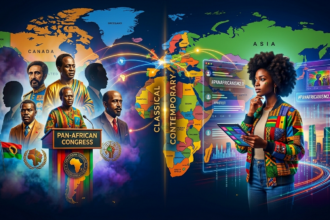


Pan-Africanism has always carried a dual legacy in Africa: one founded in disciplined political organisation and liberation strategy, and another shaped by transnational activism that often relies on symbolism, rhetoric, and confrontation.
When placed side by side, the tradition of South African Pan-Africanists like Robert Mangaliso Sobukwe and contemporary figures such as Kémi Séba reveals not only different historical contexts, but fundamentally different political methods and ethical registers.
Sobukwe, founder of the Pan Africanist Congress (PAC), emerged from the crucible of apartheid South Africa, where political expression by black South Africans was not merely restricted but criminalised.
His Pan-Africanism was not abstract. It was embedded deep in the material conditions of dispossession, pass laws, land theft, and state violence. Sobukwe’s famous insistence that “Africa must be for Africans” was not a slogan of exclusion in the modern populist sense, but a demand for political sovereignty and the dismantling of settler colonial structures.
What distinguished Sobukwe from many later Pan-Africanist voices was his emphasis on disciplined organisation and mass mobilisation grounded in clearly defined political objectives.
The 1960 anti-pass campaign, culminating in the Sharpeville Massacre, reflected a strategy aimed at directly confronting the apartheid state through coordinated civil disobedience. Even when the PAC and ANC differed in tactics, Sobukwe’s approach remained anchored in a coherent ideological framework: African self-determination, political unity, and anti-colonial liberation through structured resistance.
Importantly, Sobukwe’s Pan-Africanism was also grounded in his lived experiences at home.
While deeply connected to continental liberation struggles, it was not dependent on external validation or transnational media circuits. His political identity was forged inside the South African struggle, and his imprisonment on Robben Island was a consequence of direct confrontation with the apartheid state rather than symbolic provocation abroad.
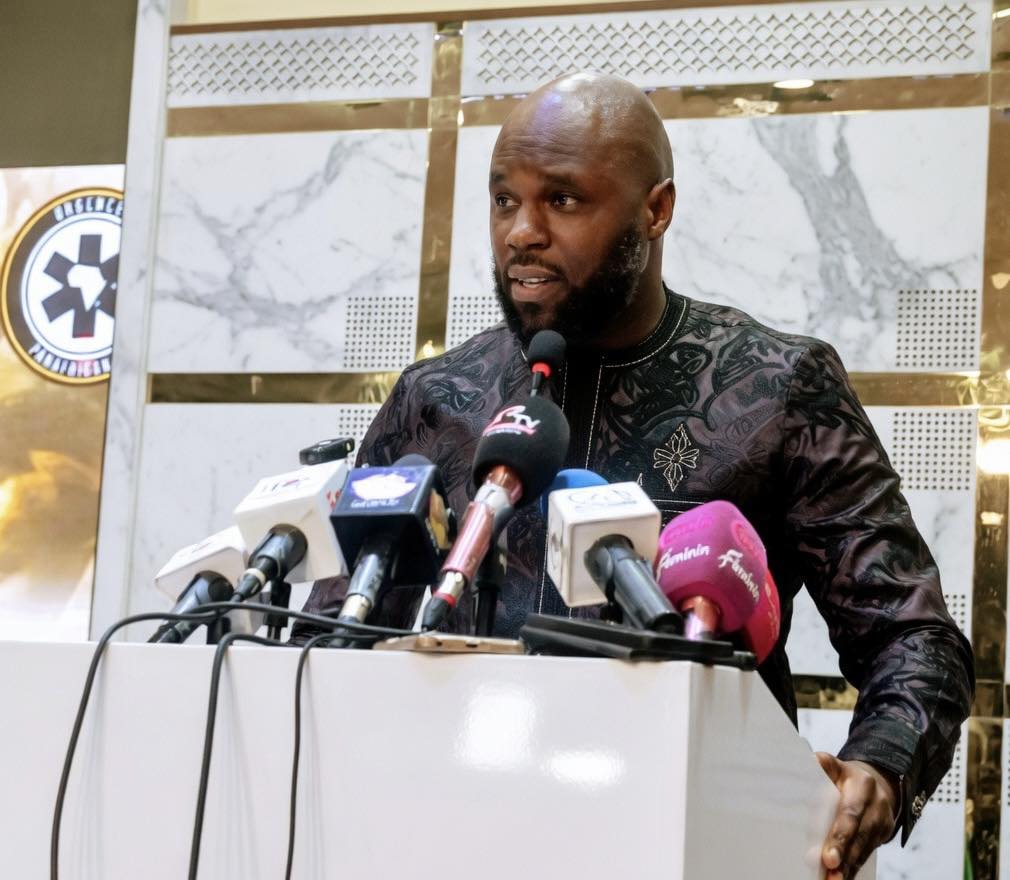
By contrast, Kémi Séba represents a different era of Pan-African activism – one shaped by global media, digital networks, and postcolonial critique framed across multiple national contexts.
Séba’s Pan-Africanism is highly performative and transnational in character, often focused on France-Africa relations, the legacy of the CFA franc, and critiques of neocolonial economic structures.
His messaging is often deliberately provocative, relying on public demonstrations, viral rhetoric, and confrontation with state authorities in multiple jurisdictions.
Where Sobukwe built a political movement with organisational depth in a single national struggle, Séba operates more as a continental activist-intellectual figure whose influence is amplified through visibility rather than institutional political structures.
His work is less about building a durable political organisation within a single society and more about mobilising sentiment across African and diasporic audiences.
This difference is not merely stylistic; it reflects contrasting understandings of how political change occurs.
Sobukwe’s generation believed in the necessity of structured liberation movements capable of sustaining long-term struggle against entrenched systems of power.
Political education, discipline, and collective strategy were central.
Séba’s approach, by contrast, aligns more with contemporary activist models that prioritise immediacy, media impact, and symbolic disruption as tools of political pressure.
There is also a divergence in how legitimacy is constructed.
Sobukwe derived legitimacy from participation in a mass liberation struggle against a clearly defined system of racial domination within South Africa. His authority was embedded in the lived experience of oppression shared by millions.
Séba’s legitimacy, however, is often constructed through moral critique of global systems – particularly neocolonial economic arrangements – rather than through leadership of a singular national liberation movement.
This does not diminish the significance of Séba’s critiques. His focus on monetary sovereignty and France’s continued economic influence in parts of West Africa resonates with longstanding debates in African political economy.
However, the mode of articulation – frequently confrontational, personalised, and media-driven – differs sharply from the institutional seriousness that characterised Sobukwe’s political life.
The contrast also highlights a broader evolution in Pan-Africanism itself.
In the mid-20th century, Pan-Africanism was closely tied to anti-colonial state formation.
Figures like Sobukwe, Ghana’s Kwame Nkrumah, and others operated in a world where the central objective was the attainment of formal political independence and the restructuring of state power.
In the contemporary era, where most African states are formally independent, Pan-Africanism often shifts toward critiques of sovereignty’s limits: economic dependency, currency regimes, trade asymmetries, and global power imbalances.
Yet the risk in this shift is that Pan-Africanism can become decoupled from the question of governance and institutional building.
Sobukwe’s legacy reminds us that liberation politics ultimately requires more than critique; it requires organisational capacity, strategic coherence, and a clear relationship between ideology and political programme. Without this grounding, Pan-Africanism risks becoming a mobile identity – powerful in rhetoric but diffuse in implementation.
Ultimately, comparing Robert Sobukwe and Kémi Séba is less about ranking authenticity and more about understanding evolution.
Sobukwe represents a Pan-Africanism forged in the fires of colonial repression, where the primary enemy was an explicit racial state and the strategy was organised mass resistance. Séba represents a contemporary Pan-Africanism shaped by globalisation, media amplification, and postcolonial economic critique.
Both reflect legitimate responses to African political realities in their respective eras.
But they also remind us that Pan-Africanism is not a fixed ideology. It is a living tradition, constantly reshaped by the conditions in which African people seek dignity, sovereignty, and agency.