

Pan-Africanism has never been a single, fixed doctrine. It has always been a living argument—about dignity, sovereignty, unity, and the place of Africa in the world. From the mid-20th century to today, its tone has shifted with circumstance. But there is a meaningful difference between the Pan-Africanism of Patrice Lumumba, Julius Nyerere, Robert Sobukwe, Ahmed Sékou Touré, and Kwame Nkrumah, and the rhetoric advanced by figures like Kémi Séba and his contemporaries. That difference is not just a difference between generations, it is philosophical, strategic, and moral.

The earlier generation of Pan-Africanists spoke from within the furnace of colonialism. Their rhetoric was sharpened by lived oppression, but it was anchored in a constructive political project. Nkrumah envisioned continental unity not merely as a slogan but as a system of common institutions, shared defence, and economic integration. Nyerere’s ujamaa was not perfect, but it was an attempt to articulate an indigenous model of development built on a foundation of communal ethics rather than extractive capitalism. Lumumba’s speeches, often fiery, were grounded in a demand for genuine sovereignty and accountable governance, not simply the expulsion of foreign influence.

Even where their governance faltered – as it often did – their ideological ambitions were expansive. They asked: what does freedom look like after independence? How should power be exercised? What responsibilities do leaders have to their people beyond resisting external domination?
Performative or developmental?
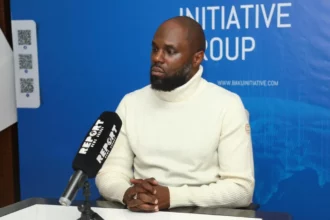
By contrast, the contemporary rhetoric of Kémi Séba tends to collapse Pan-Africanism into a narrower, more reactive posture. It is defined less by a coherent vision of governance or development, and more by opposition, particularly to Western influence, and often France. This is not, in itself, illegitimate; critique of neo-colonial dynamics remains necessary. But critique alone is not an ideology. When Pan-Africanism becomes primarily a language of antagonism, it risks losing its intellectual depth and policy relevance.
There is also a shift in how power is understood. For the earlier figures, sovereignty was inseparable from institution-building and public accountability. For some contemporary voices, sovereignty is framed more abstractly, sometimes even opportunistically, aligned with whichever external actor appears to counter Western influence, whether or not that alignment serves long-term African interests. This creates an uncomfortable paradox: a movement that claims to resist external domination can end up legitimising new forms of dependency.
Robert Sobukwe’s emphasis on African agency offers a useful contrast here. His Pan-Africanism was not about replacing one patron with another, but about cultivating a political consciousness that rejected subordination in all forms. That required discipline, intellectual rigor, and a commitment to ethical leadership – qualities that are not always evident in today’s more performative iterations of the ideology.
Ahmed Sékou Touré presents a more complicated case, given the authoritarian turn of his rule. Yet even there, the rhetoric of independence was tied to a clear, if flawed, state-building project. The question was never simply “who do we oppose?” but “what are we building in its place?”
This is where the gap becomes most visible. Much of the modern Pan-African discourse circulating on social media and in activist circuits is rhetorically powerful but programmatically thin. It mobilises frustration, particularly among younger Africans disillusioned with corruption, inequality, and the lingering effects of colonial economic structures. But it often stops short of offering credible pathways forward. In that vacuum, symbolism can take precedence over substance, and geopolitical alignment can be mistaken for liberation.
Searching for serious answers
None of this is to suggest that the earlier generation should be romanticised. Their records are mixed, and in some cases deeply troubling. But their Pan-Africanism was, at its core, an attempt to answer difficult questions about governance, economics, and identity in a post-colonial world. It was a project of construction as much as resistance.
The challenge for contemporary Pan-Africanists – including critics of figures like Séba – is not to abandon the language of resistance, but to deepen it. What would a 21st-century Pan-African economic model look like in an era of digital economies and climate vulnerability? How should African states navigate a multipolar world without becoming proxies in larger geopolitical contests? What institutional reforms are necessary to translate sovereignty into tangible improvements in people’s lives?
Until those questions are addressed with the same seriousness that earlier leaders brought to their moment, Pan-Africanism risks becoming less a guiding philosophy and more a rhetorical brand, powerful in tone, but limited in transformative capacity.
The legacy of Lumumba, Nyerere, Sobukwe, Touré, and Nkrumah is not that they were flawless, but that they treated Pan-Africanism as a responsibility. The question is whether today’s most visible voices are prepared to do the same.